Category: Uncategorized

  • The Trap of Pre-Packaged Identities

    In an era where forging an authentic identity is both exhausting and complex, human nature naturally gravitated toward shortcuts. Why do the hard work of building a grounded, multi-dimensional self when you can just adopt a ready-made template?

    We see this everywhere. Some people anchor their entire identity to a physical or mental diagnosis, reducing themselves to a label and filtering every life experience through it. But an even more pervasive example of this is the obsession with personality frameworks like the MBTI.
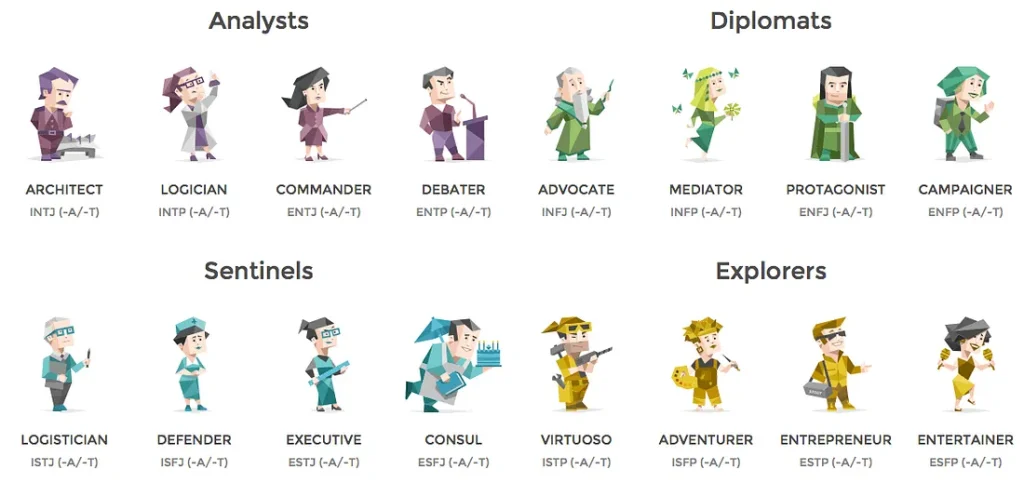
    The MBTI offers 16 neatly packaged profiles. At best, a framework like that captures maybe 10% to 20% of who a person truly is—which is a helpful starting point. The problem arises when people mistake that initial 20% for the whole picture. They freeze their growth, ignore the remaining 80% of their potential, and start asking questions like, “Would my personality type do this?” tailored to base their life decisions on the answer.

    By choosing the illusion of a pre-packaged archetype over the discomfort of actual self-discovery, they take a lazy shortcut. Over time, they realize they’ve stalled while everyone around them evolved—trapped inside a superficial shell of their own choosing.

    To be clear, I don’t reject personality theories entirely. What I reject is using them as an escape mechanism—a way to avoid facing who we really are and doing the real work of building ourselves from the ground up.

  • Microsoft 3D Builder

    For years, Microsoft 3D Builder has been one of my favorite hidden gems for working with dental 3D files. It’s simple, fast, and does exactly what most clinicians need — without the bloat of heavy CAD software.

    Unfortunately, it seems that Microsoft 3D Builder has quietly disappeared from the Microsoft Store in several regions. Whether it’s being deprecated or just hidden, many users can no longer find it through the official search.

    (more…)
  • Shade Picker App

    Shade selection has always been one of the most deceptively difficult tasks in restorative dentistry.

    Even with high-end cameras, good lighting, and experience, matching a tooth to a shade guide is still influenced by:

    • Ambient light conditions
    • Camera auto-adjustments
    • Surface reflections
    • Regional color variation across the tooth
    • Human perception bias

    What if we approached shade selection not as a “pick the closest tab” problem — but as a structured color comparison problem grounded in color science?

    That’s the idea behind Shade Master.


    (more…)
  • TS‑LWW Sync: A Pragmatic Offline‑First Synchronization Algorithm

    Modern applications live in a messy world.

    Users go offline. Networks lie. Devices crash. Two people edit the same record at the same time. Files are uploaded halfway and then abandoned. Yet expectations are brutal: the app must feel instant, never lose data, and always recover.

    This post describes TS‑LWW Sync (Timestamped Last‑Writer‑Wins Sync), a synchronization algorithm designed for real-world CRUD applications — especially offline‑first systems like a dental clinic CRM (Apexo) — where correctness, speed, and simplicity matter more than academic perfection.

    The goal of TS‑LWW Sync is not to be clever.
    The goal is to be reliable, fast, cheap, and understandable.

    (more…)
  • Interproximal Reduction in Orthodontics

    To  get space in orthodontic cases, you either follow one or more of the following paths:

    1. Expansion
    2. Extraction
    3. Interproximal reduction

    While interproximal reduction is not the favorite approach for many dentists, since it would take out precious natural enamel, it is still less aggressive than extraction and many patients favors it more than they do for extraction.

    (more…)