In an era where forging an authentic identity is both exhausting and complex, human nature naturally gravitated toward shortcuts. Why do the hard work of building a grounded, multi-dimensional self when you can just adopt a ready-made template?
We see this everywhere. Some people anchor their entire identity to a physical or mental diagnosis, reducing themselves to a label and filtering every life experience through it. But an even more pervasive example of this is the obsession with personality frameworks like the MBTI.
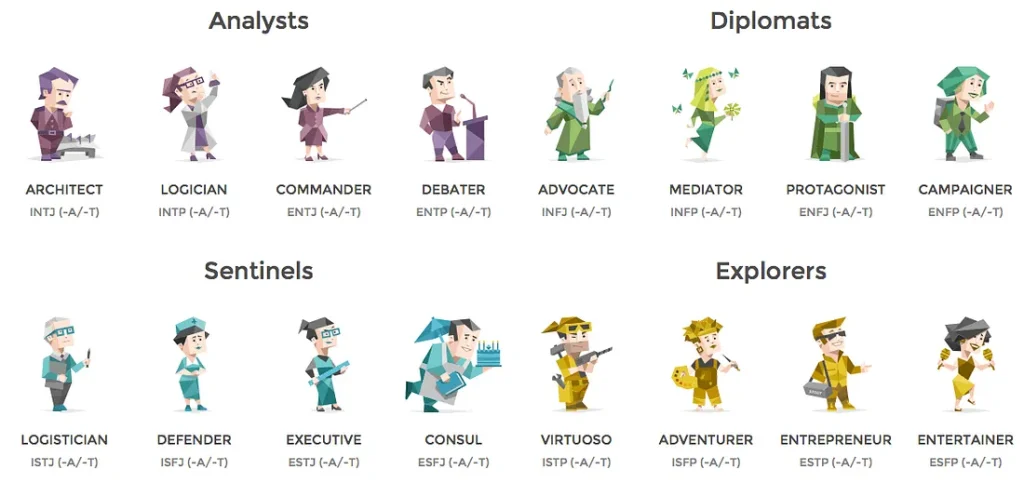
The MBTI offers 16 neatly packaged profiles. At best, a framework like that captures maybe 10% to 20% of who a person truly is—which is a helpful starting point. The problem arises when people mistake that initial 20% for the whole picture. They freeze their growth, ignore the remaining 80% of their potential, and start asking questions like, “Would my personality type do this?” tailored to base their life decisions on the answer.
By choosing the illusion of a pre-packaged archetype over the discomfort of actual self-discovery, they take a lazy shortcut. Over time, they realize they’ve stalled while everyone around them evolved—trapped inside a superficial shell of their own choosing.
To be clear, I don’t reject personality theories entirely. What I reject is using them as an escape mechanism—a way to avoid facing who we really are and doing the real work of building ourselves from the ground up.